Courses on accurate measurement of human physique:
SUM - Standardised Ultrasound Method
The courses are designed for a broad class of addressees including clinicians from a range of specialities, sports medicine physicians, physiotherapists, nutritionists, trainers, sport scientists, and experts affiliated with sport federations. Preceding experience with diagnostic (B-mode) ultrasound (US) is advantageous, but not a precondition. The image evaluation software NISOS-BCA is designed for WINDOWS operating systems only.
The goal of the BASIC and ADVANCED LEVEL courses (usually conducted in one block – within three days, followed by post-course training) is to reach a high level of accuracy and reliability for measuring subcutaneous adipose tissue (SAT) - as described in Müller W. et al. (Sports Med 2020; Br J Sports Med 2016). The SUM is described in detail and in final form in a recently published book: Müller W., Fürhapter-Rieger A., Ahammer H., Timothy R. Ackland: Beyond BMI: Accurate Measurement of Body Composition – A Change of Paradigm (IASMS, 2025).
To prepare for the course and optimise its efficiency,
we recommend taking your time to study this book thoroughly.
A personal copy is included in the course fee and also serves as the course handbook.
In particular, the Abstract and Key-points of Chapter III summarise the most important methodical aspects. The Discussion explains why using the direct method SUM when high-quality data are desired (all other methods are indirect – using series of assumptions).
In Chapter III, Methods Part 1, the marking, ultrasound image capturing and evaluation procedures are outlined. The REFERENCE VALUES of subcutaneous adipose tissue for both athletes and the general population are displayed in Table 1.
In Methods Part 2, the background for the development of SUM is explained in detail, including the estimation of SAT mass based on SAT thickness measurements. Further, the Mass Index MI, which corrects the Body Mass Index BMI for body shape, is deduced. Additionally, the set of anthropometric variables and indices used by SUM are described precisely.
Chapter I discusses the question Why Measure Physique? - in sports, medicine, and nutrition - and analyses the validity, accuracy, and reliability demands for high-quality data of physique assessment in lean individuals, for detecting minute changes, and for all kinds of scientific and practical purposes where the quality of data determines the quality of conclusions. Further, topics of body composition and health are addressed.
Chapter II is a SUM analysis of the extremely low adipose tissue levels of elite athletes in a weight-sensitive sport (climbing) – which would remain invisible when using any other method. This chapter can serve as a template for future SUM publications in scientific journals.
Supplementary Materials include tables of complete sets of SUM body composition and anthropometry data of groups of elite athletes of various sports and the graphical displays of the extensive data sets used to define the MI for men and women.
First part (BASIC LEVEL): usually two course days
Marking of the eight standardised SAT (subcutaneous adipose tissue) measurement sites
Standardised (IASMS), accurate and reliable measurement of anthropometric variables
Getting started with US imaging – basic instrument settings, probe handling skills
Supervised US image capturing (series of eight sites)
Supervised US image evaluation with the NISOS-BCA software
Getting started with the inter-active image evaluation software NISOS-BCA
Meta-data protocol sheet
Quantitative evaluation of ultrasound SAT images: directly measured thicknesses dI, dE at the eight sites and sums DI, DE (I: fasciae included, E: excluded); SAT patterning; SAT mass in [kg] and in [%] of body mass
Image analysis statistics and terminology
Anthropometric Indices: MI – correction of the BMI for shape; W/h – index of central adipose tissue - estimating ‘years of life lost’, specific purpose indices
Comparison of SUM results, discussion and correction of errors
SUM competency test for the BASIC LEVEL
Second part (ADVANCED LEVEL, part A): usually one course day
Usage of all features of the NISOS - BCA software, including export functions
Inter-observer study performed by the participants (part of the competency test)
Comparison of results, analysis of errors and measurement deviations
Interpretation of the obtained data (collection reports)
Reference data of SAT for athletes and for the general population
Estimated SAT mass in kg and in percent of body mass, specification of error ranges
Validity, accuracy and reliability of SUM
SAT patterning analyses
Relevance of the SUM adipose tissue measurement in medicine, sports, and nutrition.
Comparison to other methods; error ranges, accuracy and reliability demands.
Contents of the book:
Beyond BMI – Accurate Measurement of Adipose Tissue – A Change of Paradigm
Scientific Journal Publications
Discussion of study ideas and project designs
Discussion of manuscript drafts for scientific publications
SUM competency test for the ADVANCED LEVEL
Third part (ADVANCED LEVEL, part B): post course training
The course fee includes the software license for the additional post-course SUM measurements required for obtaining the Advanced Level Certificate.
IASMS-certifications:
Certificates of successful course participation are issued by the IASMS.
SUM course prices:
see COURSE REGISTRATION in the IASMS homepage (www.iasms.org)
NISOS - BCA software prices:
see NISOS homepage (www.nisos.at)
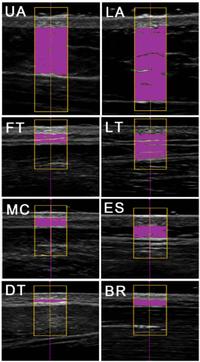 | 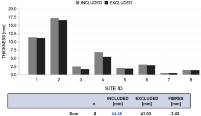 THICKNESS PATTERNING UA Upper abdomen LA Lower abdomen FT Front thigh LT Lateral thigh MC Medial calf ES Erector spinae DT Distal triceps BR Brachioradialis NISOS-BCA SOFTWARE FOR WINDOWS OPERATING SYSTEMS ONLY. |